This post concentrates on the papacy of Pope Pius IX, (21 June 1846 - 7 February 1878), with the exception of St Peter, the longest reign ever, and surely one of the most complex. It is impracticable to offer anything other than a fairly brief resume of the main events, which of necessity, will be the subject of continuing posts. I hope that you will find these of interest.
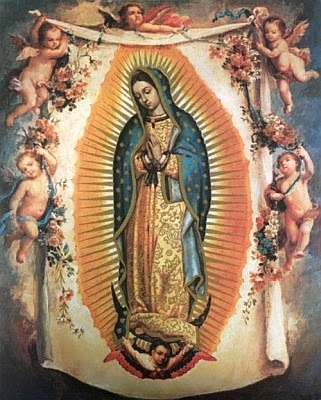
Immaculate Conception - Rubens
Pope Pius IX was born Giovanni Maria Mastai Ferretti, in Senigallia, Italy, on 12 May, 1792, the son of influential and respected parents, minor nobility, and the youngest of nine children. (In this post he is referred to as Mastai - a family name by which he was commonly known)
He was educated privately up to the age of eleven, when he was sent to the College of St Michael, Volterra, under the strict and high standards of the Piarist Fathers (‘Scolopes’), where he remained until 1809. Religious instruction and practice occupied an important part of the curriculum, with daily Mass and recitation of the Rosary and Litany of the Saints. Education was planned over a seven year term, with three cycles, 'grammar', 'humanities', and 'rhetoric', which together provided a sound basis in mathematics, science, literature, languages which included Latin and Greek, history and geography. Optional subjects included music, singing, painting, drawing, architecture, and dancing. Mastai learned to play the flute and the cello, and also taught himself French. There were public performances of plays and ballets at the College, also music recitals. Whilst school discipline was strict, it did not consist only in the observance of a detailed rule, but insisted that behaviour was imbued with dignity and poise, stipulating that all should treat each other with the greatest civility, neither must they use nicknames or other improper terms, nor show too much familiarity. A priest was in charge of discipline, assisted by 'prefects' chosen from among the most dependable boys. Mastai was a prefect for several years.
After leaving college in 1809, he went to Rome to continue his studies with a view to the priesthood, but was forced to leave when the city fell under the control of Napoleon's troops. He returned to Serraglio and enlisted in the PiusVII Dragoons in which he remained for two years. As a result of an epileptic fit, one of many experienced by him during late adolescence, he was obliged to abandon his military career, and interpreting this as God's Will, decided to concentrate on his spiritual advancement. Over a few months, his epileptic condition improved to the extent that he was admitted to the Roman College and Ecclesiastical Academy, and Rome University, to study for the priesthood.
On 10 April 1819, in Rome, he was ordained to the priesthood, and the next day Easter Sunday, he celebrated his first Mass in the church of Sant'Anna dei Falegnami, annexed to the Ospizio Tata Giovanni, a children's home where over many months, he had spent many hours instructing the children. In the ensuing years he maintained this apostolate, as well as being in great demand as a preacher for retreats and missions.
From July 1823 until November 1825, as 'auditor' he accompanied Mgr Muzzi, on an Apostolic Mission to Chile, with the third member of the party Don Salusti, as the official 'secretary'. On arrival, they found a new masonic government in power - a result of a 'coup d'etat'. In spite of certain difficulties, the Mission was able to journey throughout Chile, instructing and teaching the Catholic faith, with many confirmations by Mgr Muzzi, assisted by the two priests, who themselves were fully occupied with providing Mass and the Sacraments. Their final departure from Chile saw them travelling overland into Argentina, from whence they eventually set sail for home.
On his return more than two years later, Mastai was so worn-out by his missionary work in Chile, and exhausted by the long and dangerous journey by sea and land, that he was ordered by his superiors to take a complete rest. The memories and experience gained however, were to remain with him throughout his life.
On 3 June 1827, he was consecrated Bishop of Spoleto, governing that city during the revolutionary riots of 1831 adopting a successful policy of moderation and peace.
On 17 December 1832 he was moved to the diocese of Imola and was made Cardinal by Pope Gregory XVI.
‘Mastai,’ writes Mgr. Balan,(Italian priest, writer, and historian - contemporary of Mastai) who draws a flattering portrait of him,’ was a man of singular virtue, of great piety and purity, and of a mild and compassionate character. But he was also firm and a great expert in political matters; he had a deep understanding of the sad conditions of our society, he had personal experience of numerous upheavals and of the artfulness of the sects, and he was well versed in ecclesiastical discipline. He was eloquent, sober, temperate, with an attractive personality, kindly, a stranger to any undeserved favour towards his relatives, generous in giving his help and protection, affectionate, of a singularly delicate conscience, and he had a great devotion to the Virgin Mary. But in very stormy times he became Pope.’
Pope Pius IX (1846) - year he was elected Pope
Pope Pius IX was consecrated on 21 June 1846, followed by celebrations and public acclamations that went on into the night in the city of Rome. ‘People are always careful, to separate the Pontiff from the man; however everywhere people shouted “Long live Pius IX!” and nowhere did they shout “Long live the Pope!” (Viscount d’Arlincourt - Charles Victor Prevot, French novelist)
The personality of the new Pontiff, whose fundamental traits of goodness and candour could seem like weakness and naivety; the reformist tendencies of his own family; the fact that he had been elected Pope in preference to the intransigent Cardinal Lambruschini, Secretary of State to Gregory XVI; combined with his first public acts as Pope; could lead people to think that the time had come when the Church and the Revolution would be reconciled.
His first action was to grant an amnesty to 400 political prisoners and exiles, the victims of the strict anti-liberal policy of his predecessor Pope Gregory XVI, who were granted pardons simply by signing a declaration of loyalty. As far as Pope was concerned his gesture of clemency had no political implications, but in fact the amnesty proved to be the spark which was to set the whole of Italy and much of Europe alight, it was the beginning of a collective madness in public opinion, partly spontaneous and partly artificially created, which came to a head in the European revolutions of 1848.
“We will use the physical tears of the families and the physical of exile, to make out of the amnesty a popular weapon. We will always ask for it, happy to obtain it as late as possible, but we will ask for it with a loud voice” (Nubius, head of the Alta Vendita ‘political’ club)
It is not difficult to find in the part which was artificially created, the cause of the ‘collective madness of public opinion’ which from July 1846 to July 1848 was to create, around the name of Pius IX, the myth of a ‘liberal Pope’. This myth was in reality the fruit of a ‘systematic exploitation’ of the Pope’s initiative, and its purpose was to bring about the historic ‘embrace’ between the Church and the principles of the French Revolution.
‘The positive and conscious acts of the Pope were manipulated by means of public agitation and of those who directed it taking advantage of Pius IX’s concessions, magnifying them in order to change their significance and keeping up constant pressure to obtain new ones …….. The Risorgimento (the revolutionary movement for the unification of Italy) was directed against the Pope but it could not say so openly: for this reason, some believing Catholics contributed to it and even participated in it.’(Salvatorelli - Italian historian, 1886-1974)
Pope Pius IX - painting by Theodor Breidwiser
The public demonstrations supporting the new Pope were so enthusiastic that the Pope himself was both surprised and disturbed, and he asked the people to show restraint. Although he was not against civic progress, he was totally against the breaking-up of the Papal States and Italian unification, preferring the concept of a federation of States with the Pope as President. In spite of his protestations, he was acclaimed as a reformist and ‘liberal’ prince symbolizing and supporting the aims of the Italian Risorgimento.
‘The Roman Pontiff who for a long time had been the object of rancour, of spite, of anger and of the fury of evil men, became in Pius IX the delight and love of all peoples, the idol of Catholics, the wish of Protestants, and the object of admiration of Muslims’(Aubert)
On 15 March 1847 he granted freedom to the press on administrative and political matters. The main purpose of this was to minimise the problem of a clandestine press, but in practice it had the opposite effect, with an increase in clandestine publications provoking demonstrations and anti-government protests,
‘The government was irresolute, the censor incapable of putting a brake on excesses, and the Press largely in the hands of the radicals’ (Giacomo Martina SJ - Professor of Ecclesiastical History at the Gregorian University, Rome) (late 20th century)
On 5th July the Pope created the Civic Guard, composed of Italian citizens resident in Rome between the ages of 21 and 60, divided into fourteen battalions, corresponding to the fourteen rioni or boroughs of Rome. On its coat of arms, Religion and Liberty were depicted extending to one another one hand, while holding a crucifix in the other. Cardinal Gizzi, the Pope’s Secretary of State, opposed the creation of the Civic Guard, protesting ,
‘If Your Holiness puts arms into the hands of the people, you will become the laughing stock of the multitude. And when Your Holiness becomes tired of the excess demands of the people, you will meet resistance and you will be hounded out of Rome with the very same guns which you are now giving the people for their defence. Since I do not wish to be responsible for the consequences of such an act, I prefer to resign.’
His resignation aroused great concern throughout Europe. In the words of Metternich, the Austrian Chancellor,
‘The resignation offered by Cardinal Gizzi, and accepted, can only be considered as a phase in the drama which unfolds daily in the Papal States - an eminently serious drama of which only Providence knows the conclusion. What has happened in the Papal States is a revolution – masked as a reform’
Prince Metternich - Austrian Chancellor
On 1st October 1847, in a Motu Proprio, the Pope instituted the Municipal Council and the Senate of Rome, and on 14 October he created the Council of State, something which had previously been rejected by Pope Gregory XVI. The College of Cardinals became the Senate of the new regime, while two legislative bodies were instituted, the High Council and the Council of Deputies. Bills required the sanction of the Pope to become law.
'The Council of State was regarded as ‘a social revolution, which is no superficial matter but instead an attack on the very foundations. It is the fulfillment of the celebrations and cheers of the crowd, of the tears and the joys and the fraternal embraces’(Sterbini – leader of the Risorgimento in Rome).
The revolutionaries’ goal was to transform the Council of State from a consultative body into a genuine parliamentary legislature. Metternich predicted the inherent dangers of this new organisation, observing that
‘the Council of State contains the germ of a representative system which is as incompatible with the sovereign authority of the head of the Catholic Church as it is with its constitution.’
The Council of State led to the formation of a government composed of nine ministers which placed its authority alongside that of the Pope. The government was chaired by Cardinal Ferretti, who within six months had resigned when he realised that he could not control the situation.
On 23 February 1848, with the fall of the monarch Louis Phillipe, and revolution in Paris spreading to Vienna, Berlin, Frankfurt, Milan, Parma and Venice, the Communist Manifesto was published in London by Marx and Engels, commissioned by the so-called ‘League of the Just’.
On 13 March, Prince Metternich resigned as Austrian Chancellor.
In various Italian States, liberal constitutions were proclaimed, and on 14 March the Pope conceded the ‘Fundamental Statute for the Temporal Government of the States of the Church’. There was widespread enthusiasm in the streets,
‘this is not a revolution, it is a political and social cataclysm. The Pope and the Pope alone may perhaps be able not only to save himself, but also to become a moderating force over the events' (Massimo D'Azeglio (1798-1866)- Italian statesman, novelist and painter.)
When the day of the opening of Parliament came, less than a quorum (49 out of 100 deputies) turned up. The whole situation was artificial, for neither the Pope nor his ministers nor the deputies had any real knowledge as to how this new political system worked, and there was little sense of mutual responsibility. The effective power now rested on the one hand with the Pope, and on the other with the ‘political’ clubs of the Risorgimento, and victory depended upon which could control the populace, and in particular which had the support of the new Civic Guard.
On July 19, Mamiani resigned as premier, and the Pope concluded that the only thing to do was to appoint the one powerful and able man in Rome, Count Rossi, to succeed him. Rossi was yet another revolutionary who over the previous 33 years had been involved in various political movements in Italy, Switzerland and France, culminating in his role as French ambassador to Rome in 1846. Despite his reputation as a free-thinker, and his marriage to a Protestant wife, he became a close friend of the Pope. With the revolution in Paris in February 1848, he ceased to be the French ambassador, but chose to remain in Rome.
Pellegrino Rossi - murdered 1848
Rossi was a realist, contemptuous alike of the conspirators in the political clubs and of the politicians in the chambers, and he determined to take the necessary practical steps to save the Papal State, which was falling into chaos. The most urgent need was to enforce order, and Rossi appointed a veteran of the Napoleonic wars, Zucchi, in charge of the disorganised and demoralised Papal army, under whose leadership the rule of law was noticeably re-established. Particularly effective was the decision to disarm all those who were not members of the Civic Guard, a decision not calculated to make him popular, as neither was the Napoleonic discipline which he imposed on the army.
Political confusion was not confined to Rome; the future of all the Italian States was in the melting pot, as indeed was the future of Italy. But Rossi had a policy for Italy as well as for Rome, based on the policy of the Pope and Vincenzo Gioberti, Italian priest, philosopher and politician, which was aimed at a federation of States with the Pope as President. The liberal-minded religious philosopher Antonio Rosmini, lent his support to this plan, but at the critical moment a newly elected Turin government determined not upon federation, but upon an offensive alliance against Austria, with which the Pope would have nothing to do. Rosmini resigned his mission rather than pursue the war-mongering policies of Turin, and remained in Rome.
Turin demanded a kingdom in the north which could never be part of a federation, but would dominate the whole peninsular, to the real apprehension of every other Italian State. Had Rossi been able, as he and the Pope both hoped and intended, to proclaim from Rome the summoning of a Constituent Assembly, comprising official representatives of the Italian states, to draw up the constitution of the new Italian Confederation, it is possible that the ground would have been cut from under the feet of the revolutionary republican ‘fusionist’ party of Mazzini, and that Pope Pius IX would never have subsequently been forced to flee from Rome.
By the end of June 1847, the tone of public demonstrations had become ominous, with the mob leaders determined to win the Civic Guard, and the Pope becoming disillusioned and depressed. His initial popular appeal in Rome was fading, and physically he was described as having aged ten years since his accession a year previously. A crisis was reached on December 27, 1847, when he was presented with thirty-five miscellaneous demands, some verging on the insolent. As a result the Pope decided that the giant demonstrations which the political ‘clubs’ were organising for News Year’s Day should be called off, with troops confined to barracks and the officers of the Civic Guard kept at their quarters. As it happened the Pope decided to drive out through the streets the next afternoon, as a conciliatory gesture to his many devotees, resulting in his carriage being stopped and surrounded by a vast cheering crowd, causing the Pope real distress.
The note of menace behind the enthusiasm, with such banners as ‘Justice, Holy Father, for your people which is on your side’; ‘Down with the Police’; and ‘Death to the Jesuits’; mingling with the Vivas; fanatical faces in the poor Trastevere quarters, staring into his carriage; revealing their fear that he, the hero of the populace, was weakening.
This dangerous mob pressure increased monthly during the year 1848. Public disappointment because the Pope would not lead the war against Austria, frustration and job-hunting in the Assembly, the notion that somehow the ordinary people had been tricked and cheated by the Jesuits outspoken in their criticism of the 'risogormenti', of an utopian social transformation, combined to make the political clubs even more powerful. It must be remembered that Mazzinian schemes for the summoning of popular constituent assemblies to unite Italy on a democratic basis were being implemented elsewhere in the autumn of ’48, with Florence taking the lead with extremists gaining control.
Pope Pius IX - in later years
If Rossi’s plans for preserving the Princes and federating the existing constitutional governments were allowed to prevail at Rome, the popular uprising everywhere would be checked. Not surprisingly he had many enemies. Nevertheless, in spite of threats to his life, he attended the opening of the Chamber at the Palace of the Cancellaria on November 15th, where, in the courtyard immediately after alighting from his carriage, he was attacked by a group of men – ostensibly a ‘guard of honour’, receiving fatal stab wounds in his throat and dying within a few minutes. The onlookers began to fraternise with the Carabinieri, and it was clear that this was the beginning of a revolution which had been carefully planned. From now on all decent and moderate reformers were estranged from the leaders of the movement. The Dutch ambassador to Rome, de Liedekerke, a Protestant, a constant critic of the Papal government but an admirer of the Pope, in a letter dated 24 November, wrote, ‘I think that never has a Sovereign, so worthy of the love and devotion of his subjects of all classes, found himself so basely and so completely abandoned as at the present time.’
The Pope reacted quickly, appointing a new Premier in the person of Montanari. This had little effect for by midnight his cabinet had all resigned having discovered that the Carabinieri and the soldiers were both siding with the revolution. The ‘Clubs’ controlled by Sterbini, himself strongly suspected of involvement in Rossi’s murder, intended a giant demonstration for the next morning, when they were to demand:-
1) the summoning of a Constituent Assembly to Rome,
2) the proclamation of Italian nationality,
3) authority for the Chamber to declare war,
4) separation of the spiritual and temporal powers i.e. the end of the Papal State, and
5) the adoption of Mazzini’s programme.
The Pope had no intention of agreeing, and anticipating the demonstration, summoned representatives from the Chamber and the Council to be with him early the next day. A vast crowd was on its way up to the Quirinal, the Civic Guard and the Carabinieri had thrown in their lot with them, and the Papal troops were fraternising.
Inside the palace there were only one hundred Swiss Guards, with the Pope joined by Cardinal Antonelli, Bishop Palma, and a few priests and courtiers, and the ambassadors of France, Spain, Bavaria, Portugal, Russia, Holland, Brazil, Belgium and Prussia. The crowd made their five demands, which the Pope flatly refused. They then rushed off to arm themselves, and within an hour there were some six thousand armed men in the piazza. Shots were fired and Bishop Palma was shot dead at his window. The Civic Guard brought up a field gun, and the Pope made his formal protest to the ambassadors,
‘I protest before you all against the force which is being used towards me; and I wish to say that do what they will, I do not consent.’
Finally the Pope was forced to accept a Cabinet, but regarding the five demands he would only agree that they be discussed in the Chamber, thus postponing the matter. The crowd regarded their victory as complete, and departed. The next day saw the disbanding of the Swiss Guards and the installing of the Civic Guards in the Quirinal.
Cardinal Antonelli
The Pope was now a prisoner under constant surveillance by the Civic Guards. He was accompanied by his loyal Under-Secretary of State, Cardinal Antonelli, a source of encouragement and strength. It had become useless and indeed harmful for the Pope to remain in Rome, he could do nothing to help his friends, and he would be compelled to put his signature to the five point program, which his conscience would not allow. The stage was set, and the plot for his escape was planned with care, and executed with skill………………….. (To be continued)
Ack. 'Pio Nono' by E.E.Y.Hales. London1954 Eyre and Spottiswoode.
'Pius IX' by Roberto de Mattei. Gracewing Publications
'Pope Pius IX. The Man and the Myth' by Yves Chiron.
Angelus Press.
***********************************************
'Herod was delighted to see Jesus Christ in his court; he hoped that Our Lord would perform some miracles in his presence. Hence he proposed many questions to Him, but Jesus remained silent and gave no answer, thus reproving the vain curiosity of the haughty ruler. Miserable the soul to whom the Lord speaks no longer!'
(Thoughts from St Alphonsus)
Sunday, 9 March 2014
Monday, 27 January 2014
'Mary, Mother of God and mother of mercy, pray for us and for the faithful departed'
This post is taken from the writing of Rev. James McNally, who in his book ‘Make Way for Mary’, explores the Gospels of the Sundays of the year, emphasising the role of Mary in guiding us along the path to her divine Son.
Mary will walk to Confession with us. (3rd Sunday after Epiphany)
‘When the Son of God came down upon this earth, He was sent by His eternal Father for a purpose. God’s friendship with man had been lost, and readjustment was necessary. Man did not incur the penalty of abandonment, for God promised him a Redeemer. In God’s favoring design the Redeemer appeared. He came in the form of a Child, like any man. But His Mother was a virgin. That made Him different. Had Jesus Christ been just a human child, the very fact that He was born of Mary would have made Him greater than all other offspring. His Mother had been the confidante of God the Holy Spirit.
For thirty years Christ lived a private life, in play, in work, in prayer. Then rose the sun of just another day and, out from the tender influence of Mary, Jesus came preaching the Gospel of the Kingdom of God. Magnetically He moved among men, and persuasively called twelve of them to follow Him.
No more were they to spend their time in worldliness. Their lives were dedicated now to Jesus and His teachings. In time they would assume His work, and carry on when He would leave. Sin had left its scar upon the brightness of creation, and they were the physicians who must heal that scar. Friendship between God and man was severed in the lanes of Paradise; they were the ones who must regain that friendship. Through three turbulent and thrilling years Christ trained them for the work which they would do, and then He gave them power – a power that could strike the core of heaven, and have God confirm their every act! A power that could raise man from a level that means death, to a parapet so high that heaven is its consequence! Yes, the twelve apostles could regain the friendship lost, and heal the scar, for Christ had breathed on them the Holy Spirit. He gave them power yet unheard of, when He said, “Whose sins you shall forgive, they are forgiven them; and whose sins you shall retain, they are retained.”
In the Gospel we read of a leper whose leprosy was cleansed. Leprosy is a loathsome disease, and is repellent. But so is sin to God, to Mary and the saints. We cannot stand the presence or the sight of leprosy, and so we isolate its cases. But Jesus bears the sight of sin, and even frees us from it. “Go, show thyself to the priest,” Jesus said to the leper, and Christ still says the same to us today who have contracted the malady of sin.
Jesus is God and could forgive sin. This He very definitely proved with a miracle, when He healed the man sick of the palsy. The Jews, who admitted that God could forgive sin but did not accept Christ as God, were witnesses to this miracle. Yet even then the Jews would not recognise His claim to divinity.
There is a difference between conviction and conversion! Now this power of forgiveness Christ conferred upon His apostles. Else what other meaning to the words, “Whose sins you shall forgive, they are forgiven them; and whose sins you shall retain they are retained”? If Christ, when He used these words, did not mean what He said, then why say them? If He did mean what He said, then to what purpose the power, if men could ignore it?
The last General Absolution of the Munsters at the Rue du Bois 1915 (from the original painting by Fortunino Matania)
"At
this place (or site) on the evening of Saturday 8 May
1915
The 2nd Royal Munster Fusiliers, commanded by Lieutenant Colonel Victor Rickard Received from its chaplain the Reverend Father Gleeson A final absolution Before entering the battle of the Aubers heights Where Colonel Rickard met his death with a great number of his men. Let us remember them in our prayers" *** |
|
The term confession has nearly always been a stumbling block to our friends who are not Catholics. To them it denotes distasteful, dire things. It seems to them unnatural, this laying bare a soul unto a man. We can appreciate their attitude. Centuries of isolation from Saint Peter have taken their toll.
To Peter and the other apostles was given the power to forgive sins or to retain them; and when so many in Christendom determined to ignore Peter, they were forced also to ignore the sacrament of mercy. Today the Sacrament of Penance has assumed immense, inimical proportions to those outside the body of the Church of Christ. That which was disdainfully cast aside in the mad scramble to escape from Peter’s authority has now become a main obstacle in a return to Peter’s guidance. We Catholics agree that confession is not the easiest task at times; but we do know with a vivid faith that annihilation of the guilt of sin is worth its price in mere humiliation .
Is it really to a man that divulgence of our sins is made? Well, we Catholics know the answer. Jesus, even in today’s Gospel, draws a definite distinction between the priest and other men. “See thou tell no-one, but go show thyself to the priest.” The priest was once himself a little boy, just like other little boys; but along the way of life God touched the heart, and the heart of the boy was never the same any more. The boy went on through years and grew to manhood; and through those years he was apart from men, living in the crucible of discipline and prayer, imbibing knowledge at the feet of present day apostles, learning how to love with all his heart a Lady from the realm of heaven.
The Lady charmed him with her nearness and her beauty; she whispered in his soul at chapel prayer; she greeted him each day at dawn’s awakening, and watched him hold her rosary in his hand at night; she walked with him through seminary corridors, and stayed with him for solace in the shelter of his room; she led him up to God each morning, and through that God made him fall all the more in love with her. The Blessed Virgin told him how Christ loved the sinner, and how he must do the same; told him never to be unkind to sinners, although from the pulpit he should condemn the sin. The Virgin told him how very weak was human nature, and how even the cedars of Lebanon could fall; and she reminded him to be gentle even as she was in the days when she had to mingle with a Thomas who would not believe, and a Judas who would betray. The Virgin told him that he took the place of God, and that what was done on earth by him would be ratified in heaven.
'I am not only the Queen of Heaven, but also the Mother of Mercy'
That is why today we can take hope and courage. “Go, show yourself to the priest.” There is nothing that he will not understand, for the Virgin Mary has told him everything already. True, he may be tired, sometimes irritated, even at times somewhat harsh. But he will understand and will forgive. The Blessed Mother will see to that. And, after all, forgiveness is the important thing. Sometimes we may be at home, and quite disturbed. It may be during the hours of our business day, and we are quite disturbed. It may be during play and innocent amusement, but we are still disturbed. Disturbed because perhaps we are away from God, and somehow the fear of returning almost shuts our mind to reason! We forget that Jesus is a God of mercy, and that He will remain that God of mercy until the end of time. Mary knows the fear that can upset our soul. She knows the perturbation that may shatter our relationship with Christ. If confession is difficult, just ask the Virgin, and she will walk to the door of the confessional with us.’
Ack. ‘Make Way for Mary’ by Rev James McNally.
Published by Joseph Wagner, New York. 1950. (Imp. Francis Cardinal Spellman).
***
'Mary, Mother of God and mother of mercy, pray for us and for the faithful departed'
***
'Mary, Mother of God and mother of mercy, pray for us and for the faithful departed'
Monday, 30 December 2013
JOURNEY OF THE MAGI
Adoration of the Magi - Pieter Bruegel (1525-1569)
‘A cold coming we had of it,
Just the worst time of the year
For a journey, and such a long journey:
The ways deep and the weather sharp,
The very dead of winter.’
And the camels galled, sore-footed and refractory,
Lying down in the melted snow.
There were times we regretted
The summer palaces on slopes, the terraces,
And the silken girls bringing sherbet.
Then the camel men cursing and grumbling
And running away, and wanting their liquor and women,
And the night-fires going out, and the lack of shelters,
And the cities hostile and the towns unfriendly
And the villages dirty and charging high prices:
A hard time we had of it.
At the end we preferred to travel all night,
With the voices singing in our ears, saying
That this was all folly.
Then at dawn we came down to a temperate valley,
Wet, below the snow line, smelling of vegetation;
With a running stream and a water-mill beating the darkness,
And three trees on the low sky,
And an old white horse galloped away in the meadow.
Then we came to a tavern with vine-leaves over the lintel,
Six hands at an open door dicing for pieces of silver,
And feet kicking the empty wine-skins.
But there was no information, and so we continued
And arrived at evening, not a moment too soon
Finding the place; it was (you may say) satisfactory.
All this was a long time ago, I remember,
And I would do it again, but set down
This set down
This: were we led all that way for
Birth or Death? There was a Birth, certainly,
We had evidence and no doubt. I had seen birth and death,
But had thought they were different; this Birth was
Hard and bitter agony for us, like Death, our death.
We returned to our places, these Kingdoms,
But no longer at ease here, in the old dispensation,
With an alien people clutching their gods.
I should be glad of another death.
'Journey of the Magi' - T. S. ELIOT (1927)
*************************
'Thou canst not apprehend that Jesus Christ will stretch out His hands to chastise thee, since His Mother is occupied in swathing them in linen bands.'
Thoughts from St Alphonsus.
**********************
'Wishing one and all a very happy and blessed New Year'
Saturday, 9 November 2013
'I am the Way, the Truth, and the Life' - but how do we respond?
A very interesting recent post by Fr Martin Fox - 'Bonfire of the Vanities', in which he proposed that, 'If you don't want Heaven now, what makes you think that you will want it later?' (Sunday homily), made such an impression on me that I asked for his approval to reproduce it on 'Umblepie'.
Hence:-
'Bonfire of the Vanities'
'I resolved to know nothing while I was with you except Jesus Christ, and him crucified' -- St. Paul, I Corinthians 2:2
Saturday, November 09, 2013
'If you don't want heaven now, what makes you think you'll want it later? (Sunday homily)'
'Traditionally, November is when Catholics focus on
what are called the “four last things”:
death, judgment, heaven and hell.
We don’t like to think about it—
but winter is coming whether we think about it or not;
whether we prepare for it or not.
And it’s the same with death.
Talking about death makes a lot of people uncomfortable.
But who are we kidding?
Do you think our kids don’t know about death?
Look at video games! Look at our TV and movies!
It’s not a question of avoiding the subject.
Rather, it’s a question of looking at it as a Christian—
or as someone who has no hope.
I have been in hospital rooms and people’s homes,
and no one would say out loud what was obvious.
I don’t see how that helps anyone, children or adults.
On the other hand, I remember a woman:
a mother and grandmother,
surrounded by her husband, children, grandchildren.
They were all holding hands, praying with her, as he breathed her last.
And I heard the husband say: “I’m broken hearted, but I’m happy.”
He lost his beloved, yet he knew she’d left this life looking for Christ.
She faced death and was ready!
We believe in life after death.
But how often do we think about what that means?
If we really we are eternal, then that changes everything.
If I live 100 years, is that long—compared with eternity?
And it’s worth asking:
how much of what I spend money on, or worry about, in this life,
is going to matter in eternity?
If you want an investment that goes beyond the grave,
Feed the hungry, clothe the poor, give a helping hand—
but, above all, help bring other people to heaven!
People are the one and only form of riches that you can take with you!
So we die, and at that moment, we stand before God.
That’s our personal judgment day.
Is that frightening?
It doesn’t have to be.
No one gets into heaven because we’re good enough.
We get there through faith in Jesus Christ.
Everyone needs mercy; and if we ask, we receive it.
One form of that mercy is purgatory.
Purgatory isn’t an alternative to heaven—
it is the front porch to heaven.
It’s where we go for a final clean-up.
But there is one catch.
Even mercy isn’t, in a sense, “enough.”
Because all this depends on one more thing.
Heaven—and thus, purgatory--is only possible for us if we want to change,
and become what Christ intends us to be.
To put it even more plainly:
Heaven is for those who want it. Really!
If we want heaven—if we want to be heavenly—we’ll live that way, here.
On the other hand, if we don’t want to live that way now,
What makes us think we’ll want it, then?
We prayed in the psalm: “When your glory appears, my joy will be full.”
That’s only true if the glory of God—his truth, his ways—give us joy.
Last week, we heard about the man in the temple
who didn’t think he had any sins.
He’s not going to change—he’s likes himself just the way he is.
God warns us away from sin:
gluttony, lust, wrath, greed, pride, sloth and envy.
Those are the seven deadly sins. Avoid them.
But I like gluttony! I like wrath! We like these things.
But what God says is this: you won’t have them in heaven.
If you can’t let go of them now—
What will you do for eternity?
You see, the danger is not
that we’ll arrive at Judgment Day
and find God’s mind made up.
No! The danger is, our mind will be made up!
Heaven can’t be heaven if we can’t be happy there.
And purgatory can’t do us any good
if we don’t want to be made ready for heaven!
If you want a definition of hell, there’s one:
What you get when happiness can’t make you happy!
So, hell is real—but let’s not stay there!
The Catholic life boils down to this.
We spend our days learning who God is, and what he loves,
and asking him to help us become people who love those things.
We love lust; God loves chastity.
We love greed; God gives with an open hand.
Then, what we prayed in the psalm will come true:
“Lord, when your glory appears, my joy will be full.”
(thank you Fr Martin Fox)
***************************
'God wishes all to be saints, and each one according to his state of life: the religious as a religious: the secular as a secular; the priest as a priest; the married as married; the man of business as a man of business; the soldier as a soldier; and so on of every other state of life.'
'Thoughts from St Alphonsus'
'Mother of God and mother of mercy, pray for our Holy Father and for all our Church, especially the suffering and the persecuted, and for all the faithful departed'
Thursday, 10 October 2013
'Bedes' of Life; Maxims of Eternal Life (St Alphonsus)
Last Sunday was the feast of Our Lady of the Rosary, and at Mass we were
treated to an interesting talk on the origin of the word ‘bedes’.
The original Anglo-Saxon meaning of
‘bedes’ was ‘prayer’, but when, in the course of the twelfth and
thirteenth centuries, the use of little perforated globes of bone, wood, or
amber, threaded upon a string, came into fashion for the purpose of counting
the repetitions of the Our Father or Hail Mary, these objects themselves became
known as bedes (i.e. prayers). In middle
English the word bedes was used both in the sense of prayer and rosary. The prayers referred to used to be recited in
the vernacular at the Sunday Mass in medieval England ,
and the distinctive feature of them was that the subject of each was announced
in a formula read to the congregation beforehand. This was called "bidding
the bedes". From this the idea was derived that the word
"bidding" meant commanding or giving out, hence ‘bidding prayers’,
which we still have today.
Bedesman was at first the term applied to one whose duty it was to
pray for others, eg the chaplain of a guild, but later a bedesman became simply the recipient of any
form of bounty; for example, a poor man who obtains free quarters in an almshouse,
and who was bound in gratitude to pray for his benefactors. Similarly, bedehouse,
which originally meant a place of prayer or an oratory, came at a later date to
be used of any charitable institution like an almshouse. Today certain Welsh
place-names in the form bettws, e.g. Bettws y Coed, reflect this
tradition. Finally, bede-roll, was the roll of those to be prayed for, particularly
deceased members of guilds and associations.
(Ack. Catholic Answers - see BEDE)
******************************
Recently I came across the following article in a book written by St
Alphonsus de Liguori, founder of the Congregation of the Most Holy Redeemer
(C.SS.R), and Doctor of the Church.
In order to live always well, we must store up deeply in our
minds certain general maxims of eternal life, such as the following:
All passes away
in this life, whether it be joy or sorrow; but in eternity nothing passes away.
All that comes from God, whether it be adverse or prosperous, all is good, and is for our welfare
We must leave
all, to gain all.
There is no peace
to be found without God.
If God be lost,
all is lost.
He that desires
nothing in this world is master of the whole world.
We need only be afraid of sin
Let me die, and
give God pleasure.
Everything
becomes a pain that is not done for God.
St Francis Xavier preaching - Reubens
He that loves God, finds pleasure in everything; he that loves not God, finds no true pleasure in anything.
'May Our Lady guide and protect our Holy Father, Pope Francis'
Tuesday, 10 September 2013
'Same-sex marriage' - a 'step too far' for David Cameron

Details
'The marriage feast at Cana' - Murillo
Through the media, we in the UK are lead to believe that now the concept of ‘same-sex marriage’ has been approved by Parliament, everything in Society’s garden will be rosy. In fact we have not even begun to experience the problems that this legislation will inevitably bring. It is therefore encouraging to know that the millions of voters in this country opposed to this shameful legislation are not 'out on a limb' as it were. In fact the majority of nations throughout the world have voiced their opposition and will have nothing to do with it.
In July this year, the
"We consider ourselves, like normal, standard people, we just live boys with women, girls with boys ... it comes from the history," Isinbayeva told reporters.
Stefano Gennarini J.D.
writing on the C-FAM blogsite on 26 July
this year, has this to say:-
‘Eastern
European countries are following Russia ’s lead to protect children by
curbing advocacy for “non-traditional” sexual acts. Homosexual groups are
reacting furiously.
Last
month Moldova passed a law prohibiting the
distribution of information “aimed at the propagation of prostitution,
paedophilia, pornography or of any other relations than those related to
marriage or family.” Lithuania recently adopted a similar law, and
Ukraine ’s legislature is reportedly considering the same.
The
laws are designed to protect minors from graphic information that may lead them
to unhealthy choices at a delicate age. Russia ’s law, adopted in June, fines
individuals and organizations for promoting “non-traditional” sexual behaviour
among children.
The
homosexual lifestyle, in particular, is associated with a host of health risks.
Individuals who engage in homosexual activity are 18 times more likely to contract HIV/AIDS than persons who don’t. They are at
higher risk for other sexually transmitted diseases, substance abuse,
depression, and suicide.
The
laws have been on the books in some Russian states for nearly a decade.
National legislatures began enacting them this year, after President Obama
ordered all U.S. agencies dealing with foreign
affairs to promote lesbian, gay, bisexual and transgender rights, and
established a fund for foreign LGBT groups to agitate within their countries.
At that same time, British Prime Minister David Cameron threatened to cut aid
to countries that have laws penalizing sodomy.
In Russia ,
a recent Pew poll found only 16% believe homosexuality should be socially
acceptable. Attempts to apply
international pressure have not deterred nearby countries from considering and
adopting similar laws to Russia ’s.
On
30 July on the C-FAM blogsite, Stefano Gillani continues,
‘
Human Rights Organizations from around the world are supporting Russia ’s effort to protect children from
homosexual propaganda.
A
statement from Civil Society affirms the recently enacted Russian law, which
imposes fines on individuals and groups that ‘promote homosexuality among
minors’, as important steps towards fulfilling international obligations
towards the family and minors.
Organizations from around the world are “rushing” to offer their support according to ‘Profesionales por la Etica’, http://www.profesionalesetica.org/ the
The statement recognizes the Russian law as an effort to
protect the family, the fundamental group unit of society. The law is about
protecting the “innocence of children” and the “rights of parents”.
Critics of the Russian law find it difficult to address yet another
reason for enacting the laws, namely the negative health consequences of homosexual
activity.The Lancet reported last summer that homosexuals are 18 times more likely to contract HIV than heterosexuals, due to a combination of biological and behavioural risks associated with homosexual activity. Moreover, HIV is receding in most of the world, except among homosexual populations where it is skyrocketing. Homosexuals are also at higher risk for substance abuse, suicide, and depression.
Rumours
earlier this month suggested the law would not apply to visitors during the
Winter Olympics to be held in Sochi next year, but those rumours have
been dispelled.
Russians are determined to defend the law. Putin has issued
a decree prohibiting any rally or demonstration in Sochi that is not related to the Olympics
for the period surrounding the event.
**********************
Wikipedia provides some
interesting statistics, which show that generally, apart from Western
Europe , South America , Canada ,
New Zealand ,
and some States in the USA ,
same-sex marriage is not accepted in law, and active homosexuality is often a
criminal offence. Interestingly it is clear that same-sex marriage is not an
issue which has developed over a long period of time, it is a 21st
century phenomenon orchestrated by a vociferous and powerful minority group world-wide, using the concept of ‘equal rights’ to legitimise their demands, and
which has appeared virtually out of nowhere. It has become the
‘instrument’ used by liberal and anti-clerical politicians of all nationalities to
destroy traditional Christian, particularly Catholic, practice and belief, replacing it with a
totally secular definition of marriage legitimising unnatural physical same-sex
union, forbidden by God and condemned by
the Church.
http://en.wikipedia.org/wiki/Status_of_same-sex_marriageIt is encouraging to see eastern European countries oppose this legislation, all the more surprising in that so many of these countries were part of the old Communist bloc when religion was banned and religious persecuted. Clearly the people have not been blinded by the materialism of their western European counterparts, and have the strength and the will to overcome this attack on their traditional Christian heritage and way of life. Similarly in
In the UK we will have to wait and see how this unwanted, unwise, hasty, and intrinsically bad legislation will encroach on our traditional liberties and lives, particularly as it affects religious sensibilities and 'conscience' rights, employment, education, public services, and not least 'free speech'. In 18 months time, from his seat in the Opposition Benches, David Cameron may well rue the day he espoused this tainted cause, the day on which he went a 'step too far'.
Subscribe to:
Posts (Atom)
'The Last Four Sorrows' of Our Lady' - Charles Journet
'The Last Four Sorrows of Our Lady' Charles Journet Fourth Sorrow This was Mary’s sufferings ...
-
Today’s event is tomorrow’s history, thus my recent decision to join my school Old Boys Association, having left that particular establishme...
-
Westminster Cathedral from Victoria Street I have just been looking at the website of Westminster Cathedral Choi...
-
'The Last Four Sorrows of Our Lady' Charles Journet Fourth Sorrow This was Mary’s sufferings ...


.jpg)